Stress, Breathing, and Back Tension: How They're Linked
Some back tension has an obvious story — the heavy box, the long drive, the awkward night on a sofa. But there is another kind that arrives without you lifting anything at all: the tightness that builds through a hard week, sits across the shoulders and lower back by Friday, and eases, mysteriously, on holiday. That kind is not imaginary and not rare. It is stress, doing what stress has always done to muscles.
This guide walks through how a busy mind ends up in an aching back, why the breath is the most practical handle on that whole loop, and a ten-minute routine of five gentle moves that may help you let the day out of your back before it settles in for the night.
How a stressful day becomes a tense back
Stress is not just a mood; it is a body state. When your nervous system reads the day as demanding, it quietly prepares you to act: heart rate up, breath faster and shallower, and muscles — especially the ones along the spine, across the shoulders, and in the jaw — held slightly braced. That bracing is useful for a moment of real action. Held from nine to five, it is simply work your back does all day without moving an inch, and worked muscles ache.
There is a second loop stacked on the first. A nervous system under pressure also turns up the volume on sensation, so the same back reads louder in a stressed week than in a calm one. Tension makes the back sore, soreness feeds the feeling that something is wrong, and that feeling adds tension. Nothing in this loop means your back is damaged — it means the alarm is set a little sensitive, which is exactly the kind of thing that responds to calming practice.
Stressful days also tend to be still days: hunched over the urgent thing, meetings back to back, the walk skipped. So the braced muscles never get the movement that would normally rinse the tension out. That is the opening the routine below is built for.
Why the breath is the handle
You cannot simply decide your shoulders down — anyone who has tried knows they creep back up within a minute. The breath is different: it is the one part of the stress response you can steer directly, and the rest of the system listens to it. Slow, low breathing — the kind that moves the belly and the back ribs rather than the collarbones — is a signal to the nervous system that the emergency is over, and muscles gradually release their bracing when the message lands. Stress showing up in the body this way is thoroughly ordinary; MedlinePlus's overview of stress lists muscle tension among its most common signs.
The pattern worth practicing is almost embarrassingly simple: in through the nose for about four counts, out — slowly — for about six. The long exhale is the active ingredient. A few minutes of it tends to slow the heart, soften the jaw, and make stretches settle noticeably further than they do on a held breath.
Breath alone helps; breath paired with slow movement tends to help more, because the moving muscles get the release message and something to do with it. That pairing is the whole design of the routine below — every move in it is a shape that makes slow breathing easier to find.
The 10-minute unwind routine
Do these in the evening, or whenever the day has wound you up — lights lower, phone in another room. Ride the four-in, six-out breath through all five moves, keep every range comfortable, and count drowsiness as success rather than a problem.
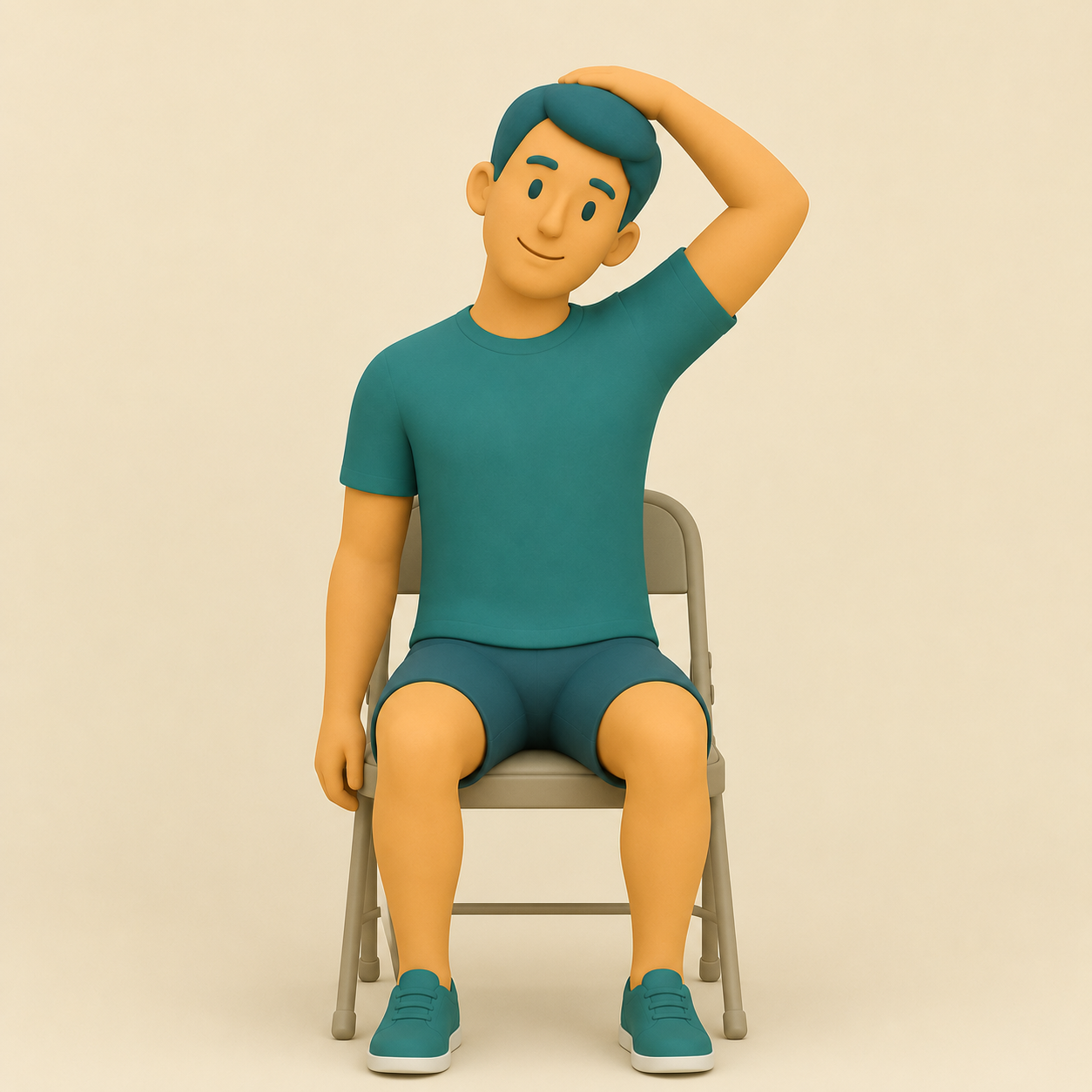 Upper-trap stretch — 20 to 30 seconds per side. Stress parks itself first in the slope between neck and shoulder. Let the resting hand add only its own weight, and breathe length into the side of the neck.
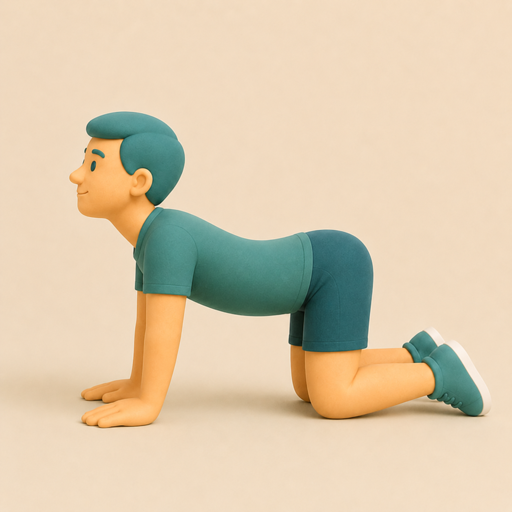 Cat-Cow — 8 slow breath cycles. The wave through the spine with the breath doing the steering: inhale to arch, exhale to round. Keep the range small and let the exhale be the slow half.
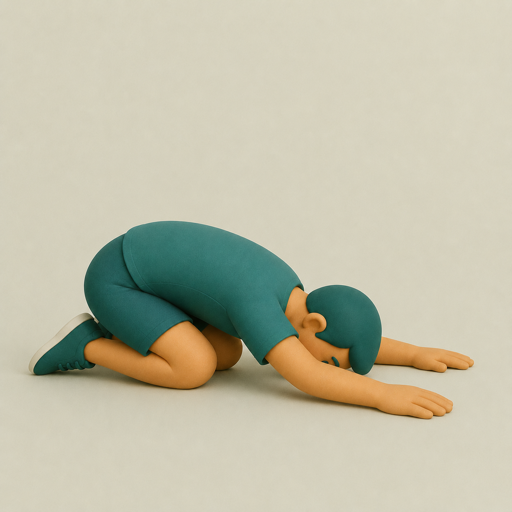 Child's Pose — 60 seconds. A fold that makes low breathing easy to find. Aim each inhale into the back ribs, and let each exhale leave you a little heavier on the floor.
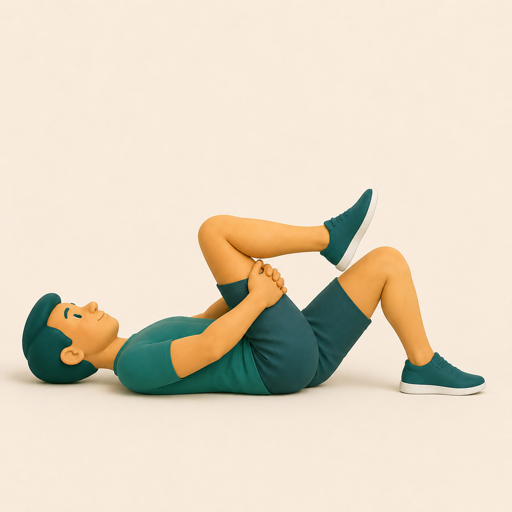 Single knee to chest — 30 seconds per side. A quiet hug for the lower back with nothing to achieve except a longer out-breath. Let the shoulders and jaw unclench while you hold.
 Supine twist — 45 seconds per side. The classic finisher: knees dropping lazily to one side, shoulders heavy, the day unwinding out of the spine one exhale at a time.
Keeping the loop from rebuilding
The evening routine empties the glass; a few daytime habits slow how fast it refills. The cheapest one is a single deliberate breath at every natural seam in the day — after each call ends, when you hit send, at every red light: one long exhale, shoulders down, jaw loose. It takes five seconds and interrupts hours of accumulating brace. Pairing it with the movement breaks in the desk-day moves guide covers both the tension and the stillness at once.
Where you put the routine matters too. If your tension peaks at night — busy mind, tight back, slow to drop off — run it as the first half of your wind-down and let the gentle stretches before bed carry you the rest of the way. The two overlap on purpose; calm is a thread that runs through both.
And if you would rather have the whole picture assembled for you, the 60-second check-in builds a daily ten-minute plan around your specific back — where it hurts, what makes it worse, what your days look like — and guides you through one short session a day, with the first session free.
When tension deserves a professional
See a healthcare professional promptly if back pain comes with numbness or tingling, pain running down a leg, fever, unexplained weight loss, or follows a fall or injury — and likewise if it keeps worsening over weeks or reliably wakes you at night. The NHS back pain guidance lists the same warning signs. And the stress half of the loop deserves care in its own right: if low mood, anxiety, or broken sleep have been heavy for more than a few weeks, talking to a doctor or mental-health professional is a better next step than more stretching.
This guide is educational information, not medical advice. When in doubt, check with your doctor before starting any exercise program.
Reading helps — a plan does the deciding for you: which moves, in what order, for your back.
Start my 60-second check-inFirst session free · no card needed
Educational information, not medical advice — consult a licensed healthcare provider, and check with your doctor before starting any exercise program.